

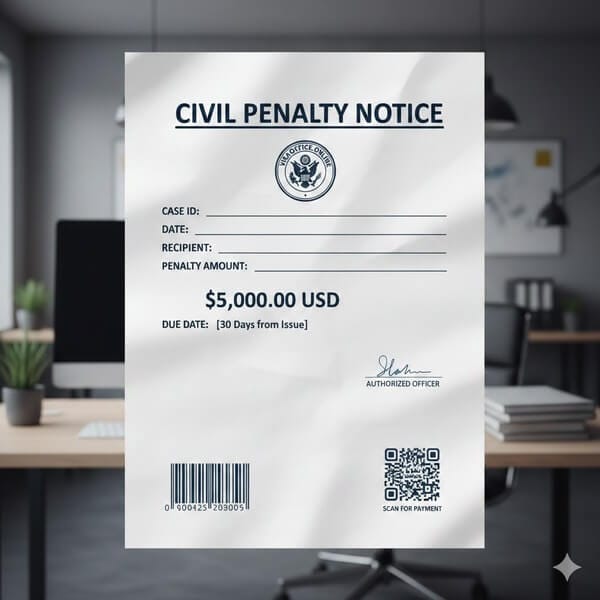
What is a Civil Penalty?
If you hire someone in the UK who does not have the legal right to work, the UK Home Office can fine you. This fine is called a civil penalty.
The penalty can be up to £60,000 per illegal worker as of 2024. This is a big financial risk for any business — whether you are a small company or a large organisation.
For the latest penalty amounts, visit the official UK Home Office: Preventing Illegal Working guidance.
How Does It Work?
The Home Office carries out compliance checks on businesses across the UK. During these checks, officers verify whether every worker in your organisation has the right to work.
If they find someone who should not be working legally, they will:
- Issue a civil penalty notice to the employer
- Set a fine based on how many workers were employed illegally
- Give you a chance to object or appeal the penalty
However, if you can prove you carried out proper right to work checks before hiring, you may have a statutory excuse — meaning you will not have to pay the penalty, even if the worker turns out to be illegal.
Learn more from the official Right to Work Checks: An Employer’s Guide on GOV.UK.
Who Can Be Fined?
Any employer in the UK can receive a civil penalty — including:
- Businesses sponsoring overseas workers
- Recruitment agencies
- Sole traders and self-employed individuals
- Charities and non-profit organisations
If you are currently holding or applying for a Sponsorship Licence, it is especially important to stay compliant. A civil penalty or non-compliance can lead to your licence being suspended or revoked.
How to Avoid a Civil Penalty
The best way to avoid a civil penalty is to follow the right process before you hire anyone. Here is what you should do:
1. Conduct Right to Work Checks Before a new employee starts work, check their documents. Accepted documents include a passport, biometric residence permit, or share code from the Home Office Online Right to Work Checking Service.
2. Keep Copies of Documents Store copies of all right to work documents securely. You may need them if the Home Office ever audits your business.
3. Carry Out Follow-Up Checks For workers with time-limited permission to work (such as those on a Skilled Worker Visa or Health Care Visa), you must carry out repeat checks before their permission expires.
4. Train Your HR Team Make sure your HR or management team understands the right to work rules. An honest mistake is still your legal responsibility.
What If You Already Received a Civil Penalty Notice?
Do not panic. You have the right to:
- Object to the penalty within 28 days if you think it is wrong
- Appeal to an independent court if your objection is rejected
- Negotiate a reduction if you cooperate fully with the Home Office
Acting quickly and getting proper legal or immigration advice is key at this stage.
How Visaoffice Can Help
At Visaoffice, we help UK employers stay on the right side of immigration law. Whether you need help setting up right to work processes, applying for a Sponsorship Licence, or bringing in overseas staff through a Skilled Worker Visa or Dependent Visa, our team is here to guide you every step of the way.
Do not wait until a compliance check lands at your door. Get ahead of it now.
Contact Us Today for a free consultation via WhatsApp or phone.
Note: Immigration rules can change. Always verify the latest guidance from the UK Home Office website.
Frequently Asked Questions (FAQ)
1. What is a civil penalty in UK immigration?
A civil penalty is a financial fine issued by the UK Home Office to employers who hire someone without the legal right to work in the UK. The fine can be up to £60,000 per illegal worker.
2. How much is the civil penalty for employing illegal workers in 2024?
As of 2024, the maximum civil penalty is £60,000 per worker for a first offence. Repeat offenders can face higher fines and even criminal prosecution.
3. Can I avoid a civil penalty if I did not know the worker was illegal?
Yes — but only if you carried out proper right to work checks before hiring. If you followed the correct process and kept copies of the documents, you may have a statutory excuse, which protects you from paying the fine.
4. What documents do I need to check before hiring someone?
You should check documents such as a valid passport, a biometric residence permit (BRP), or verify the worker’s right to work using the Home Office online checking service. Always keep a copy securely on file.
5. What happens if I receive a civil penalty notice?
You have 28 days to object to the penalty if you believe it is wrong. If your objection is rejected, you can appeal to an independent court. Acting quickly and getting professional immigration advice is strongly recommended.
6. Can a civil penalty affect my Sponsorship Licence?
Yes. If you hold a Sponsorship Licence and receive a civil penalty, the Home Office may suspend or revoke your licence. This means you would no longer be able to sponsor overseas workers on a Skilled Worker Visa or other routes.
7. Do I need to carry out repeat right to work checks?
Yes. If you employ workers with time-limited permission to work in the UK — such as those on a Skilled Worker Visa or Health Care Visa — you must carry out a follow-up check before their permission expires.
8. Can small businesses also receive a civil penalty?
Yes. The civil penalty applies to all employers in the UK — including small businesses, sole traders, charities, and large companies. There is no exemption based on business size.
9. How can Visaoffice help me avoid a civil penalty?
At Visaoffice, we help employers set up the right compliance processes, apply for a Sponsorship Licence, and manage overseas worker documentation correctly. Contact us today for expert guidance.
10. Where can I find the official UK Government guidance on civil penalties?
You can find the latest official guidance on the UK Home Office website.